How to Choose Foldable Fabric Storage Boxes for Wholesale
A practical checklist for comparin…
Foldable fabric storage boxes look simple, but small construction differences can create large differences in stability, freight cost, shelf presentation and customer satisfaction. A wholesale buyer should therefore compare more than unit price and color. The right specification depends on where the product will be sold, what it will hold and how it must travel through the supply chain.
1. Start with the intended use
A box for lightweight clothing does not need the same reinforcement as a box designed for books, toys or office supplies. Before asking for a quotation, define the expected contents, target load and storage location. A cube for an open shelf may need a clean front panel and accurate dimensions, while a lidded box for a closet may prioritize dust protection and carrying handles.
It is also useful to identify the sales channel. Retail stores need attractive packaging and easy product explanation. E-commerce sellers usually care more about packed dimensions, carton strength and resistance to damage during parcel delivery.
2. Compare the structure, not only the outer fabric
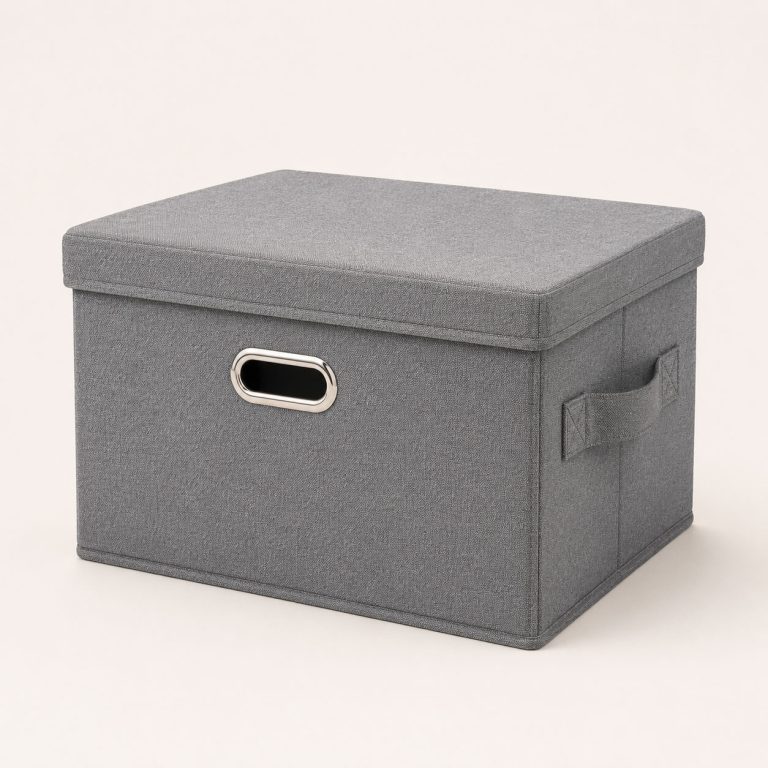
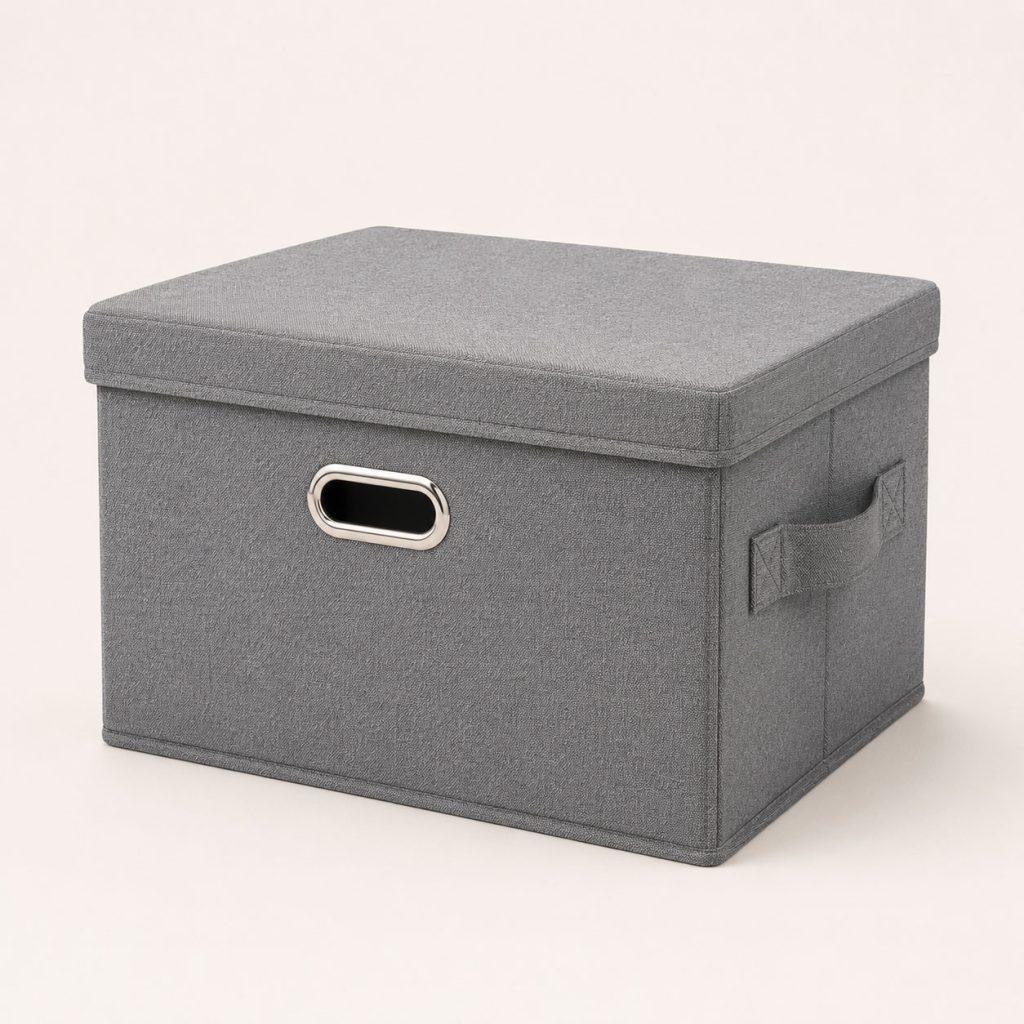
The visible fabric is only one part of the product. Buyers should confirm the reinforcement material, panel thickness, base construction, handle attachment and lid design. A reinforced cardboard structure can help a box maintain its shape, but the grade and thickness should match the intended load.
- Check whether all sides are reinforced or only the front and base.
- Ask how the handle is stitched or attached to the panel.
- Confirm whether the lid is removable, hinged or integrated.
- Review how flat the box folds and whether it opens cleanly after transport.
3. Confirm dimensions in both open and folded form
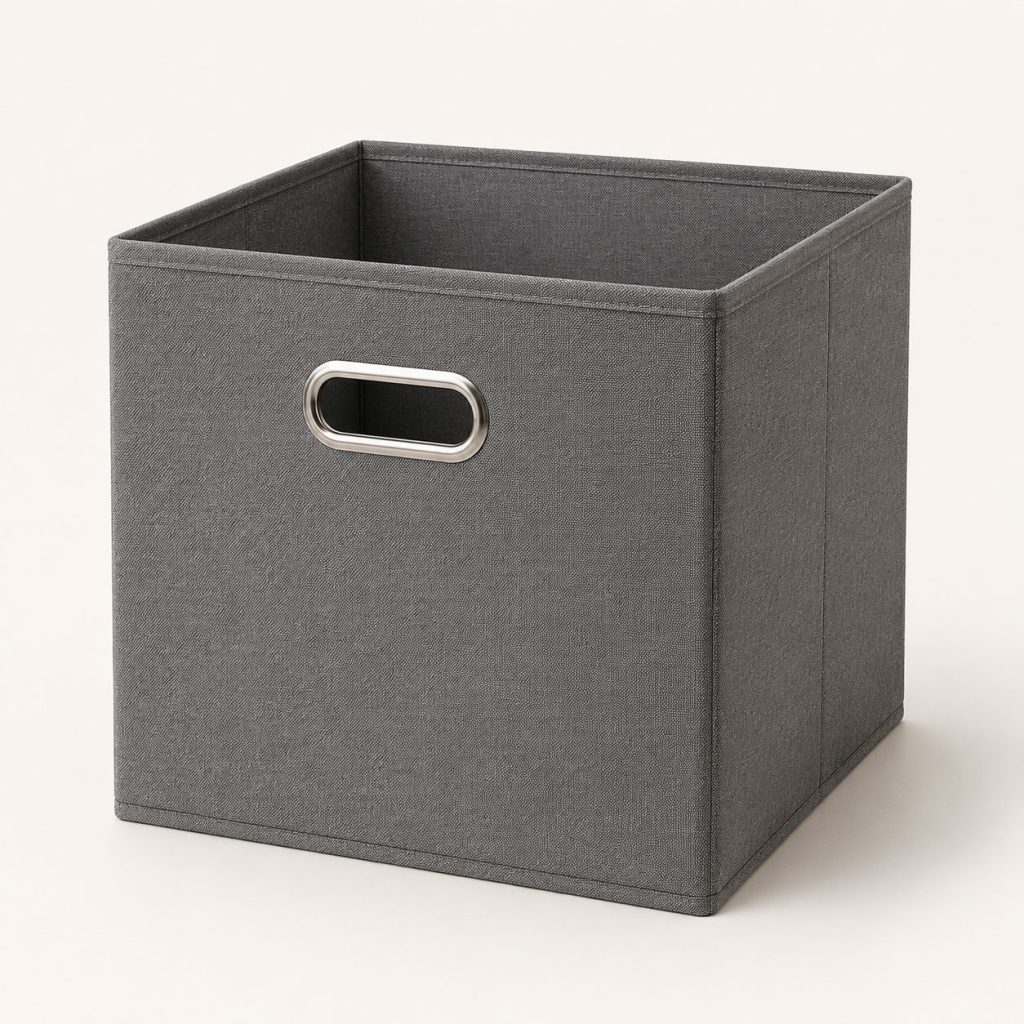
Open dimensions determine storage capacity and shelf fit. Folded dimensions affect packaging, carton quantity and freight efficiency. For example, Qigu Home’s published foldable fabric storage box uses a 40 × 30 × 25 cm open size, but a buyer should still request packed dimensions and carton information before calculating landed cost.
Tolerances should also be discussed when the box must fit a specific shelf system. A small difference may not matter for general home storage, but it can matter for cube shelving or private-label furniture collections.
4. Review material, color and logo options together
Material choice affects appearance, hand feel, durability and price. Color approval should be based on a physical sample or an agreed color standard, especially for repeat orders. Logo methods such as printing, woven labels and leather labels create different visual effects and may require different minimum quantities.
Do not approve the logo independently from the product color. Contrast, label position and handle placement should be reviewed on a complete sample.
5. Treat packaging as part of the product
A polybag may be enough for a basic wholesale program, but retail and e-commerce channels may require inserts, color cards, barcode labels, warning labels or individual cartons. Ask the supplier to show the product in its final folded and packed condition. This helps identify excessive compression, wrinkling and carton inefficiency before production.
6. Build a quotation request that can be compared
To receive useful quotations, send the same specification to each supplier: open size, folded size, fabric, reinforcement, target load, color, logo method, packaging, quantity and destination. Ask for sample time, production lead time and carton data separately.
A clear request reduces hidden assumptions. It also makes it easier to compare suppliers on the same basis instead of choosing a low price that was calculated with a lighter material or simpler package.
Final purchasing checklist
| Item | What to confirm |
|---|---|
| Use | Contents, target load, shelf or closet application |
| Structure | Panel reinforcement, base, lid and handle construction |
| Size | Open dimensions, folded dimensions and tolerance |
| Branding | Color standard, logo method and label position |
| Packaging | Individual pack, barcode, insert and master carton |
| Timing | Sample approval, production and shipment schedule |
Once these points are clear, the supplier can prepare a more accurate sample and quotation, and the buyer can evaluate total value rather than unit price alone.